How will AI-powered tee time booking affect golf course pricing?
AI booking agents go straight to a course's own tee sheet for live inventory, which means more direct demand chasing a fixed supply of tee times. They also arrive with explicit intent, such as a time window and budget, so operators can answer with the right offer. Noteefy CEO Jake Gordon argues in Golf Inc.'s 2030 technology forecast that this shifts pricing power to operators who are reachable by agents, policy-protected and ready to compose the right offer.
By 2030, the most important pricing conversation at your course will happen between two pieces of software: the golfer's AI agent and the operator's tee sheet.
A version of this article originally appeared in Golf's technology forecast for 2030, published by Golf Inc. on November 12, 2026, in its November/December 2026 issue.
Over the last five years, dynamic pricing strategy taught operators what airlines, hotels and ticketing learned long ago: a tee time is a perishable product, and its rate should move with demand, weather, day of week and booking window. That lesson has shaped revenue management ever since. However, historical dynamic pricing technology and strategy changed how courses set the price, not where the sale happens.
Over the next few years, the biggest driver of rate will be access to exponentially more distribution via tee time booking agents.
Golfers are already starting to ask AI assistants to find and book tee times at accelerated rates. Across 200+ course websites we track, AI-referred visits grew 499% in 2025 while direct traffic fell. Agents go to the closest, easiest source of live inventory: the course's own tee sheet. That means significantly more direct demand for operators. With little new supply coming online, more demand chasing a fixed number of tee times is a durable tailwind for rate. Agentic booking will drive more pricing power for course operators.
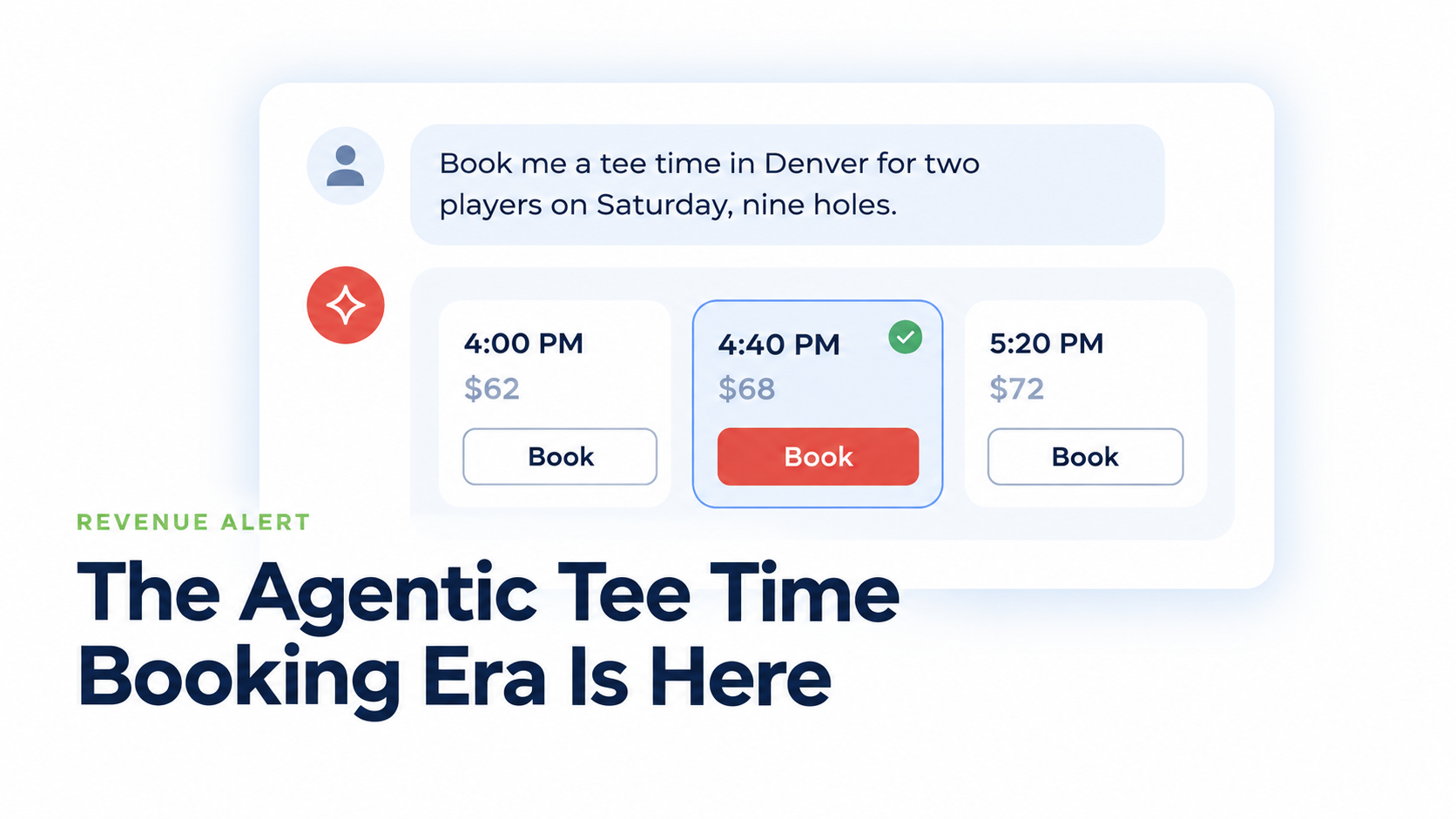
Individualized pricing won't mean charging two golfers different prices for the same 8:10 tee time. It means agents hand operators something golf has never had at the moment of booking: explicit intent. A request like "this weekend, 8 to 10, under $100" carries budget, time window and flexibility. The course's agent can answer with the right offer: a 7:50 with a cart for $95, or a premium package for the golfer shopping on experience.
For operators, three things change. The tee sheet becomes the storefront: if an agent can't read, hold and book a time, you're not on the shelf. Deposits and card-on-file separate real golfers' agents from brokers' bots. And revenue management becomes a daily, AI-assisted discipline instead of a seasonal rate card.
For golfers, booking gets simpler and regulars get recognized. The operators who are reachable, policy-protected and ready to compose the right offer will set the price. Everyone else will take it.
Jake Gordon is co-founder and CEO of Noteefy, which powers direct booking and revenue tools for more than 1,500 golf courses. This article originally appeared in Golf Inc.'s Golf's technology forecast for 2030 (November/December 2026). Read the full forecast, with perspectives from other industry leaders, at golfincmagazine.com.