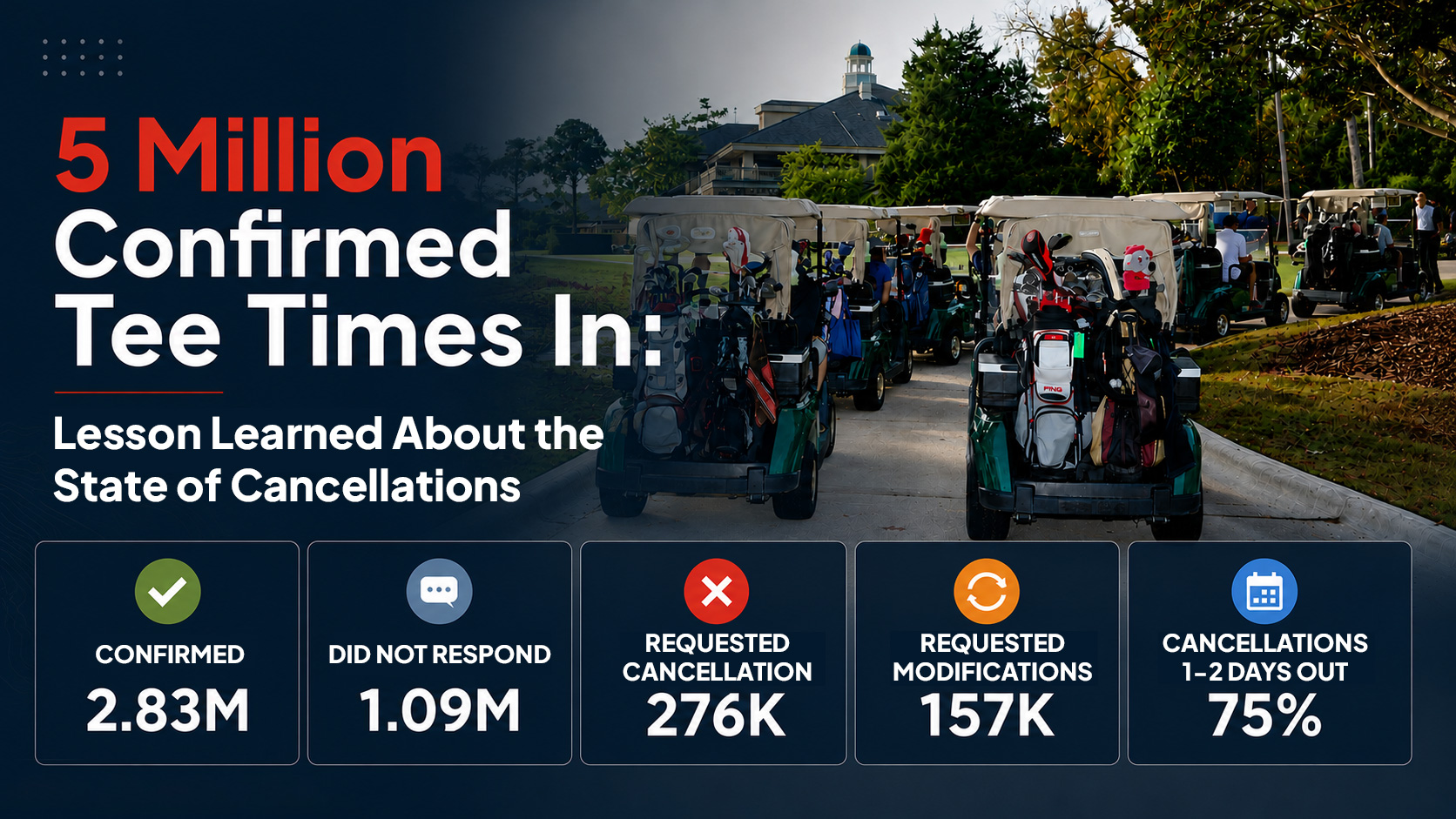
Are Pre-Pay and Advanced Booking Fees a Good Idea for Golf Courses?
For high-demand public courses, pre-pay and advanced booking fees are increasingly proving their value: reducing no-shows, eliminating speculative bookings, and creating more predictable revenue. The evidence from Los Angeles County's 34 municipal courses (where a $10 non-refundable deposit cut serial cancellers from 398 accounts to 13) and Rustic Canyon Golf Course's tiered booking window shows the model works when fees are framed around golfer benefit, calibrated to actual demand, and paired with the right technology infrastructure.
A tee time is a perishable product. Once 7:42 a.m. Saturday passes with two no-shows, that revenue is gone, along with any food and beverage, cart, or pro shop spend those golfers would have generated. Airlines solved this decades ago with non-refundable fares. Hotels solved it with advance purchase rates. Golf is finally starting to catch up, and the results from courses that have made the move are hard to argue with.
Similar to movie tickets, airline flights, hotel rooms, and restaurant reservations, a tee time is a perishable product.
Once 7:42 a.m. on Saturday passes with two short-shows, that green fee revenue is evaporated along with any ancillary spend from those golfers.
To mitigate perished inventory, airlines and movie theaters moved to reserved seating with full or partial pre-pay to ensure maximum occupancy. This practice has become the standard and the thought of buying 4 movie tickets, showing up with 2, then being mad at the theater for charging the two slots is laughable.
But in golf, this is not the case for the most courses despite historic demand. In 2026, the majority of public courses still have golfers who book online pay at the pro shop.
In theory, this is to reduce friction in booking, which is understandable in an era of excess supply relative to demand. However, that is no longer the case in golf as demand far outpaces supply.
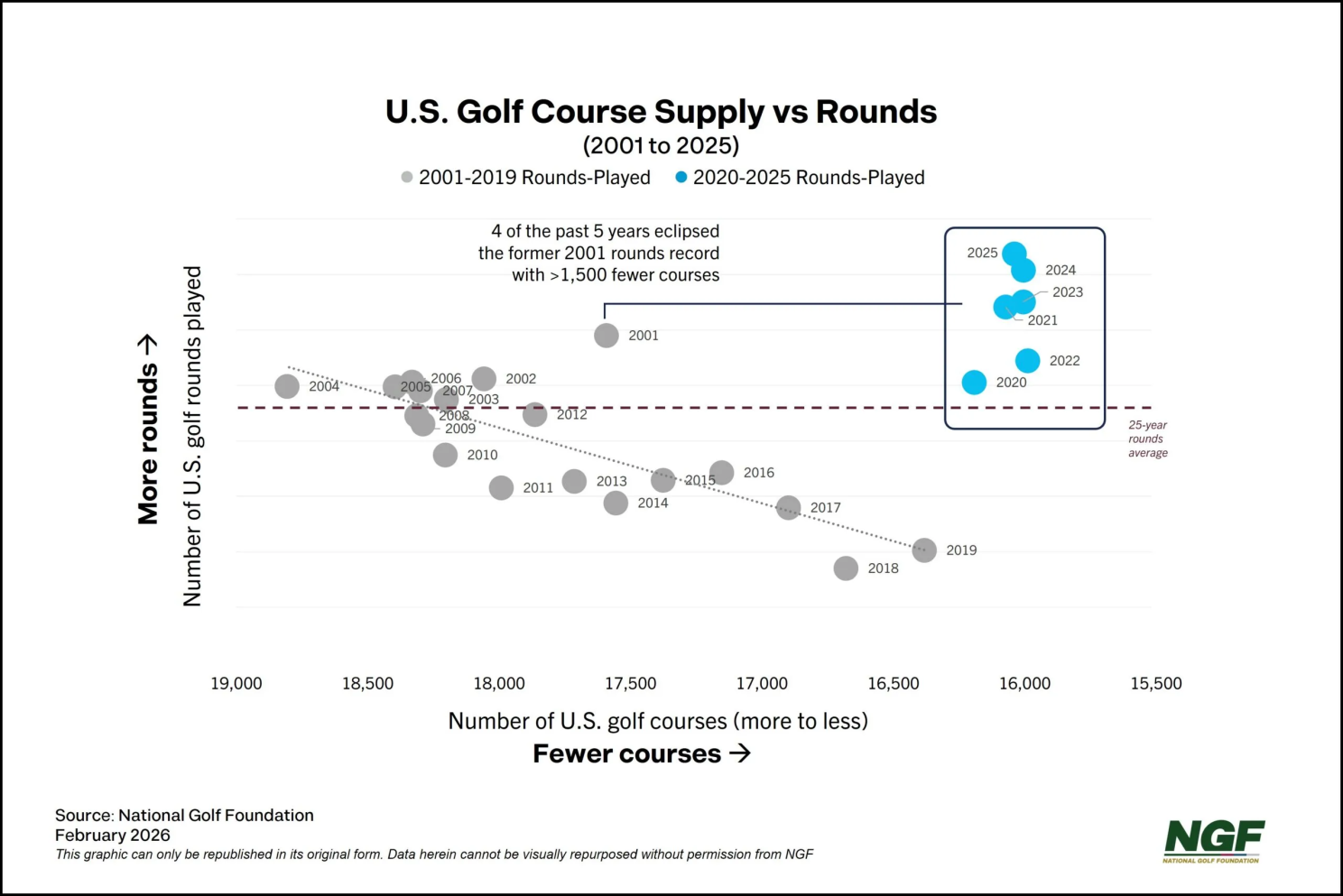
Additionally - this operator practice of being casual with golfers paying in person has had a real impact on revenue, with an industry no-show rate of 9%. The impact is over $1 billion in lost opportunity annually, according to the National Golf Foundation.
That begs the question - with 550+ million rounds played annually and a record 29.1 million on-course participants, has golf finally reached the demand threshold where courses can mitigate these challenges with partial or full advanced booking fees?
Case Study on Non-Refundable Booking Fees: Los Angeles County's 34 Courses
Los Angeles County and its 34 municipal courses may be the largest sample size to test the concept when in 2024, a $10 non-refundable deposit was introduced to combat a tee time brokering crisis.
Effective August 1, 2024 at all County of Los Angeles owned golf courses:
- The establishment of a $10.00 non-refundable reservation deposit to be collected at the time of reservation for each round and player, seven days a week; and
- The establishment of new tee time reservation cancellation fee. If a golfer cancels their reservation within 48 hours prior to tee time, or is a no-show or short-show, in addition to the forfeit of a $10.00 non-refundable deposit, an additional fee of $10.00 per player would be charged as a cancellation fee.
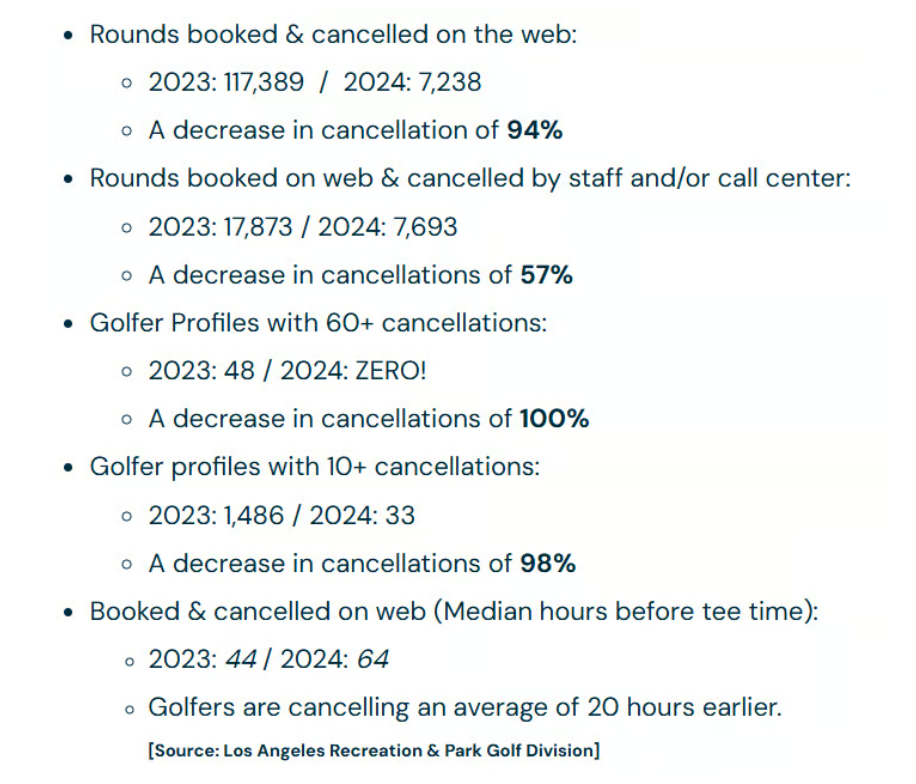
The impact was immediate. TEE TIME BROKERS AND NO SHOWS - POLICIES TO MITIGATE THE PRACTICE ARE WORKING AS INTENDED – SO FAR
Golfers who had been skeptical became advocates once they could actually book a Saturday morning tee time. The deposit didn't just deter bad actors, it restored trust in the system. Think about how that parallels the airline experience: nobody loves a non-refundable fare, but most travelers accept it because the alternative is worse: a free-for-all where seats evaporate to speculators.
Forty miles northwest in Moorpark, California, Rustic Canyon Golf Course has been running a different version of this experiment; not as a response to brokering, but as a proactive revenue management strategy. Their tiered booking windows with non-refundable fees look less like a municipal policy memo and more like the fare class structure you'd see at Delta or the advance purchase rate at a Marriott.
What Rustic Canyon Figured Out With Tiered Advanced Booking
If LA's deposit is a defensive play, Rustic Canyon Golf Course represents the offensive version. This Gil Hanse design in Moorpark, California - regularly ranked among the best public courses in America (despite a sub $100 green fee)- didn't implement booking fees to fight brokers. They did it because their demand profile justified it.
Rustic Canyon splits its booking into two windows. Within 1–14 days, golfers book at standard rates—$65 for prime time Monday through Thursday, $90 on weekends.
Rustic Canyon Golf Course | Moorpark, CA - Rates & Fees
But the course also offers an advanced booking window at 15–28 days out, with a non-refundable booking fee baked into a higher rate: $85 for weekday prime time (includes a $20 non-refundable fee), $110 for weekends (also $20), and $10 fees on twilight and super twilight times. Critically, all advanced bookings must be made online and prepaid.
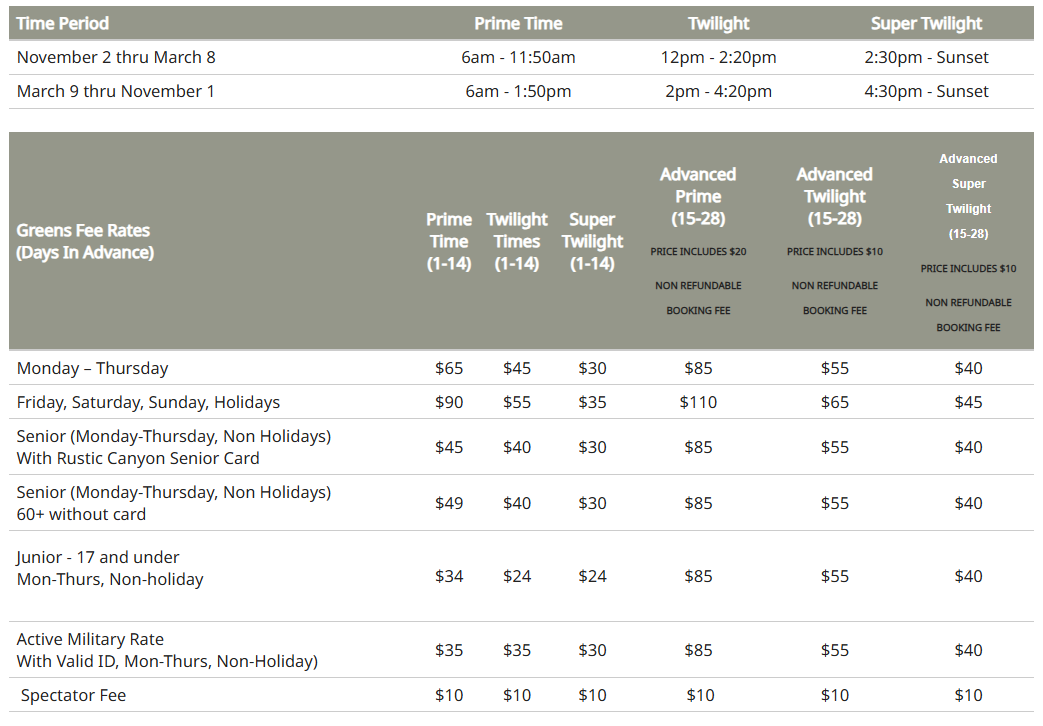
What Rustic Canyon is really doing is customer segmentation - separating the planners who will pay a premium for certainty from the spontaneous players who book within two weeks at the standard rate. Both groups get what they want. The course captures incremental revenue from the advance window and gains early visibility into demand. It's less about deterring bad behavior and more about rewarding commitment.
Here is their exact language: We accept reservations up to 28 Days in advance. A customer account and credit card are required to make any tee time reservation. Reservations made 15 to 28 days out must be booked online and prepaid at our Advanced Premium rate. You must call the Pro Shop to cancel a reservation made 15 to 28 days in advance and a non-refundable booking fee will be deducted from the cancellation refund. Please see booking fee prices below.
Reservations up to 14 days out may be made in person in the Pro Shop. All other reservations must be booked online. Please use the online portal to cancel tee times booked within the 1-14 days window. A credit card is required to hold all tee time reservations. Cancellations must be made 24 hours in advance. Cancellations for tee times made within 2 to 14 booking window must be done through the online customer portal. All no-shows and cancellations not made within the 24-hour window will be charged the full rate of tee time with the credit card on file.
Learning From Other Leisure Industries: The Perishable Inventory Playbook
None of this is happening in a vacuum. Golf is arriving at a place where other leisure industries have been for years - the recognition that time-bound inventory requires commitment-based booking to function.
Airlines got here first with nested fare classes in the 1980s. A non-refundable ticket isn't a penalty - it's a discount in exchange for commitment. The airline gets revenue certainty and demand forecasting data; the traveler gets a lower price. Revenue managers use this to optimize seat allocation and reduce the cost of empty inventory. Rustic Canyon's two-window structure follows the same logic: commit earlier, pay a premium, get the time you want.
Hotels offer "Advance Purchase" rates at 10–25% below the best available rate, often 30–180 days out, prepaid and non-refundable. This locks in occupancy and gives revenue managers demand signals for staffing, pricing, and inventory decisions. LA's $10 deposit serves a similar function at a simpler scale—it's not a discount, but it creates the same skin-in-the-game commitment mechanism.
Movie theaters charge $1.79–$2.29 per ticket through platforms like Fandango for the convenience of reserving a specific seat. AMC even uses fee waivers as a loyalty perk for A-List members - which raises an interesting question for golf: could a course offer booking fee waivers to loyalty members, pass holders, or frequent players, turning a revenue tool into a retention tool?
Even restaurants are now pushing to a non-refundable deposit using OpenTable: Deposits on OpenTable, a new weapon against no-shows.
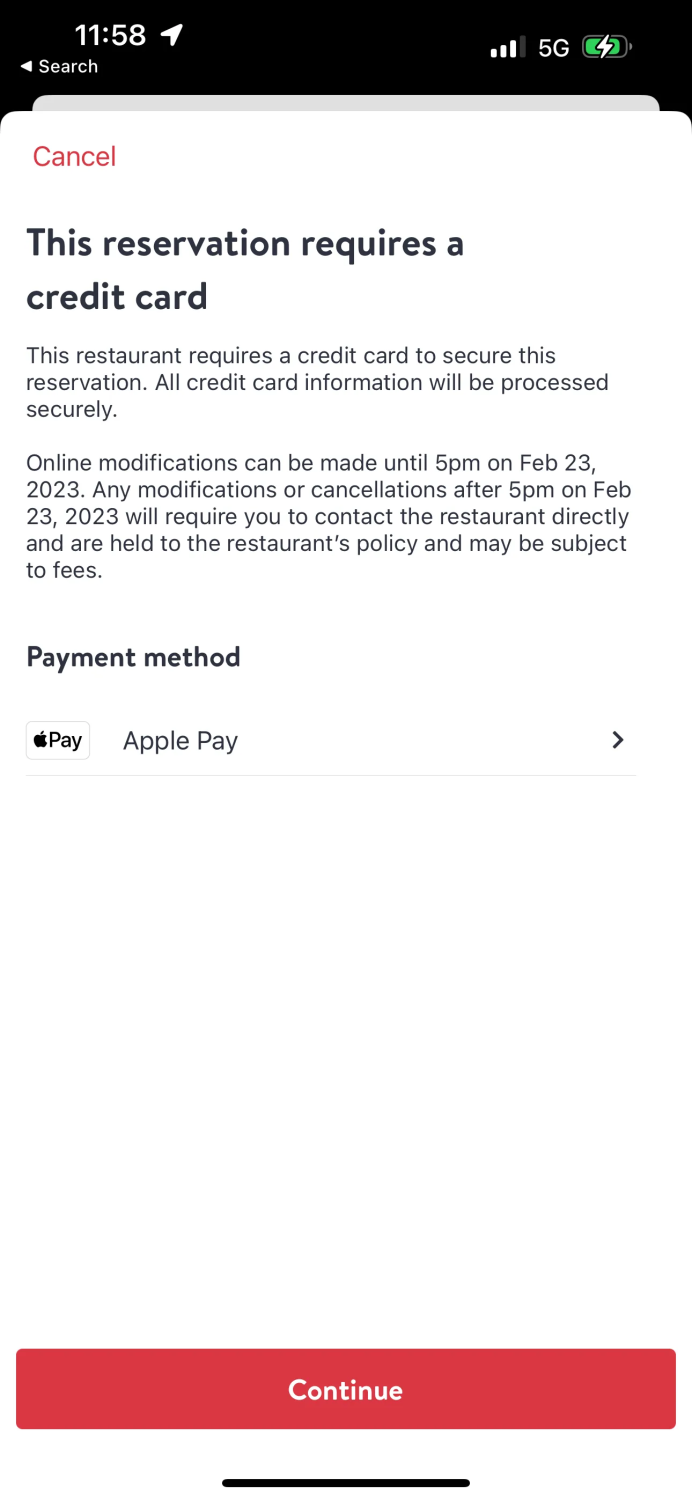
The pattern across all of these categories is consistent: when inventory is perishable and demand is strong, consumers accept - and often prefer - a system that asks for commitment in exchange for access. The friction isn't the fee itself; it's whether the fee feels earned. That distinction matters enormously for golf, and it's where implementation separates the success stories from the backlash.
The Case For: What the Data Tells Us
The evidence from LA and Rustic Canyon points to several clear benefits:
Speculative booking collapses. LA's numbers are hard to argue with - serial cancellers (60+ cancellations) went from 398 accounts to 13. That's not incremental improvement; it's a near-total elimination of the behavior. For any course dealing with no-shows or phantom bookings, a non-refundable deposit creates immediate accountability.
Inventory returns to real golfers. When speculative bookings disappear, tee times open up for people who actually want to play. The anecdotal and survey data from LA showed golfers gaining access to courses they'd been locked out of for years.
Cancellation patterns improve. Golfers in LA began cancelling 20 hours earlier on average, giving courses more time to resell inventory. When paired with demand management tools like automated waitlists and pre-confirmation alerts, every early cancellation becomes a revenue recovery opportunity. As Pacific Springs GM Todd Anderson told Noteefy after moving to online-only booking: "Technology closes the loop. We don't have to call people anymore. The system does it for us."
Revenue becomes more predictable. Whether a golfer shows up or cancels, the fee is already collected. For Rustic Canyon, that's $10–$20 per player on advanced bookings. Across a busy tee sheet, it adds up - and it gives operators better demand signals for dynamic pricing and staffing decisions.
The Risks: What Operators Should Watch For
No policy is without tradeoffs, and booking fees are no exception. Operators considering this approach should think carefully about the following:
Golfer perception matters. There's a meaningful difference between "we're charging you more" and "we're offering you something valuable." Rustic Canyon's model works partly because the fee buys something tangible—an extended booking window that's otherwise unavailable. LA's deposit, by contrast, is applied universally with no additional benefit, which is why communication and framing are critical. Pacific Springs succeeded with online-only booking because their messaging centered on golfer benefit: "Booking online is faster for you and more accurate for us."
One size doesn't fit all. A $10 deposit at a high-demand LA municipal course with chronic brokering problems is a very different proposition than a $20 fee at a mid-tier course with available inventory. Operators should calibrate the fee to their demand profile—not copy a policy designed for a different market. The fee should solve a real problem at your course, not create a new one.
Where Does This Leave Operators?
Every course is different. A $10 deposit that transformed 34 LA municipal courses may not translate to a majority private club in the Midwest. A tiered booking window that works at a Gil Hanse gem in Southern California may not suit a course with soft midweek demand. Context matters.
But here's what's harder to argue with: golf's demand fundamentals - the NGF reports 21 million Americans "very interested" in playing, a pool that's grown 37% since 2019—have pushed the industry past the point where a tee sheet can operate like an open ledger. The same forces that pushed airlines toward fare classes, hotels toward advance purchase rates, and theaters toward reserved seating are now at work on your booking system.
The operators navigating this well share a few things in common: they pair commitment-based booking with technology (online systems, automated waitlists, dynamic pricing), they frame fees around golfer benefit rather than course revenue, and they treat booking policy as part of a broader demand management strategy—not a one-off fix.
The question isn't really whether advanced booking fees are a good idea or a bad idea. It's whether your tee sheet's booking infrastructure has caught up to the demand it's trying to serve. For a growing number of courses, the answer is starting to look the same.