Why do only 1 in 4 new golfers become committed players?
Golf brings in 1 to 3 million new players a year, but industry data shows only 1 in 4 stick with the sport long enough to become committed golfers. The gap isn't a demand problem, it's a retention problem: new golfers who feel intimidated, hit friction booking a round, or have a poor first experience quietly stop coming back. Since replacing a lost golfer can cost $500 to $1,000 or more in marketing spend, courses that focus on customer service, low-friction booking, and welcoming new-golfer touchpoints (like starter speeches) can close that gap for far less than it costs to acquire a new player from scratch.
Since golf's explosion during COVID, between 1 and 3 million new golfers try out the game every year. Awareness of the sport has never been higher, driven by alternate formats, consumer golf media like Netflix's Full Swing, YouTube golf, and Masters viewership hitting all-time highs.
The problem, however, shows up one step later: of those net-new golfers, only 1 in 4 actually become committed players.
The Industry Is Great at the Top of the Funnel
Jake Gordon, Co-Founder and CEO of Noteefy, put the finding plainly on a recent webinar with Lightspeed exploring the modern golf experience: "...we're doing an awesome job as an industry with the top of funnel, awareness of the game... but people who actually stick with it and become golf nuts, really are only 1 in 4."
For every four new golfers who try the game, three of them will drift away entirely, after the industry already spent the marketing dollars, media impressions, and course capacity to bring them in.
It's a Leaky Bucket, Not a Demand Problem
Jake returned to the same idea later in the conversation: "Thinking about that leaky bucket of the funnel, where 75% of golfers don't become loyal or active golfers, the question is, how do we make sure that we can turn that around, and that the customer lifetime value probably matters more than ever?"
Ross Liggett, VP of Data at Noteefy and a former multi-course operator, tied the two ideas together: the industry needs to "take control of our opportunity through loyalty... so that we don't have to start paying for customer acquisition" to replace the golfers who quietly stop coming back.
How Can Courses Win New Golfer Loyalty?
Earlier this season, Jake covered the topic of loyalty in 2026, which included knowing your golfer better, taking back the relationship with your golfers, and making the pro shop interactions matter.
For new golfers specifically, there are a few tactics course operators can employ to help new golfers feel more welcome on the course and keep them coming back.
Customer Service Is Everything
According to a spring 2026 Lightspeed survey of golfers, 71% said customer service impacts whether or not they will play a course again. It may seem simple, but the power of customer experience as a loyalty tool cannot be underestimated.
Steve Marini, Director of Operations at Ron Jaworski Golf, agreed when asked how customer service shows up day to day across his 7 courses: "It's everything... it's something that we focus on a lot, creating fun environments for them to come back and play, making their life easy when they want to book that tee time, and giving them an enjoyable experience."
Reduce Golfer Friction at Every Turn
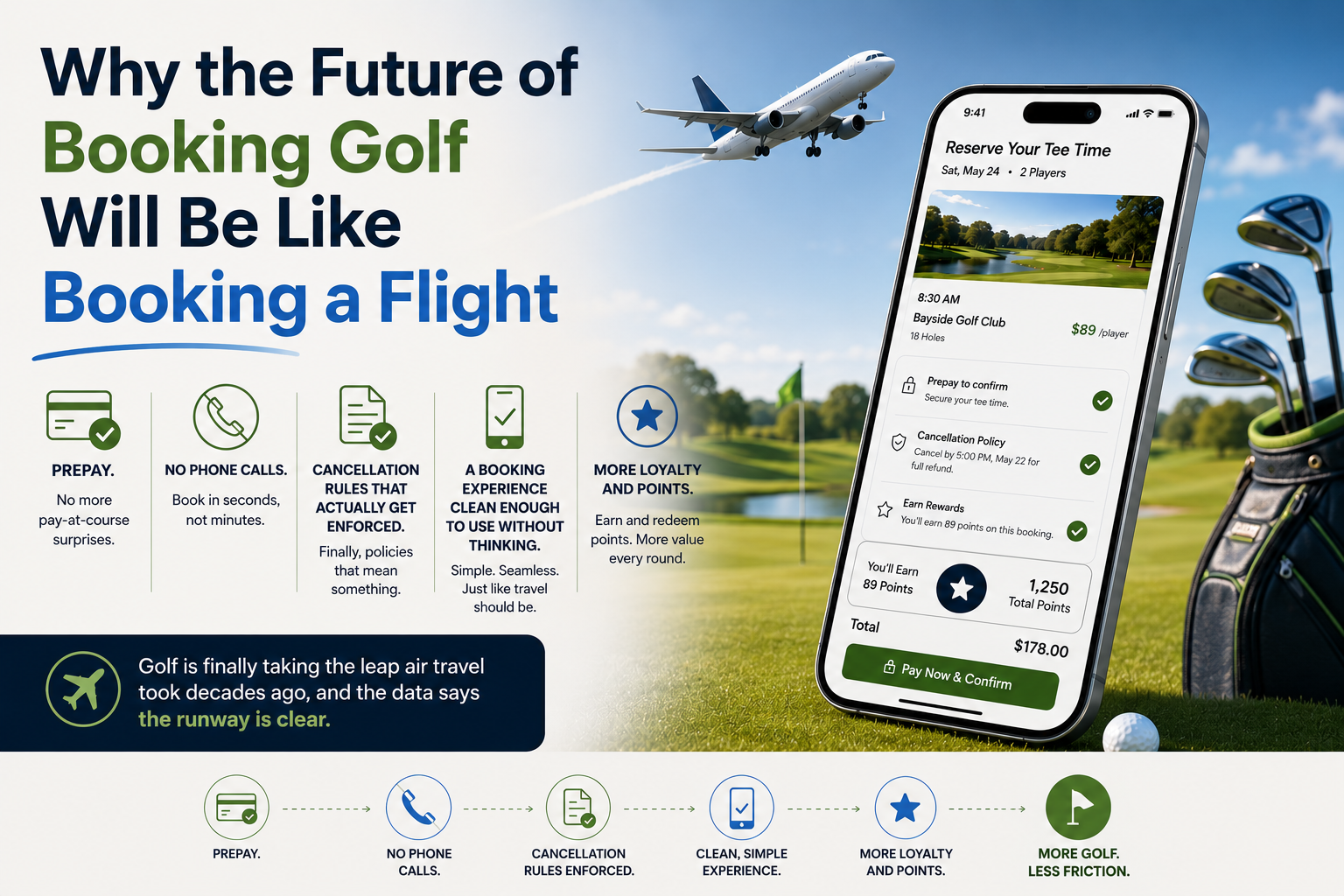
Steve touched on this as well: making their life easy when they want to book. Golfers in the modern era have certain expectations, especially around convenience. That includes easily finding answers about your course, tee times, rates, and how it plays with simple web searches and a seamless online booking experience where it takes minimal clicks to find, book, or waitlist the desired tee time.
That's backed up by the data on the more than 200,000 conversations our AI Pro Shop Assistant has been having with golfers over the last 12+ months. Golfers who make a phone call couldn't find the simple answers on your website. And if your new golfers have questions and are forced to pick up the phone to get answers, you've created a major obstacle for a golfer segment comprised largely of millennials who dread picking up the phone.
Not to mention, every phone call the pro shop receives that's the same question, "what's available Saturday morning?", "is it cart path only?", "what's your twilight rate?", is drawing the focus and energy of your staff away from earning the loyalty of golfers on-site.
Spend Time Educating New Golfers
Here's one thing we all know: golf is hard. That alone is a barrier that keeps the new golfer from becoming committed. Then what happens when that new golfer is trying to improve by being on course on Saturday at 9am?
Jake asked, "How do you balance that tension? Every regular wants to fly in 3 hours and 45 minutes out there but the reality is, when you're on green grass, it could be a struggle in the beginning. If that new golfer feels pressure or they're getting stares or getting hit into, that could create almost a negative customer experience."
Steve agreed, and noted the importance they place on starter speeches, and focusing on communication as a customer experience touchpoint. Part of that includes educating new golfers on the best time to play to enjoy their experience without disrupting pace of play or feeling like the foursome behind is pressuring them. "They're getting in the game from Topgolf and things like that, right? They're working their way over, so I think we need to do a better job of communicating to them: 'Hey, you should come out this time. It's probably going to be better for you.'"
The Real Opportunity Is Already on the Tee Sheet
For years, new players have been pouring into the top of golf's funnel. The massive retention gap has been sitting in plain sight, and as demand begins to soften, the real opportunity isn't acquiring more new golfers, it's turning more into committed golfers.
Closing even a fraction of that 75% gap is worth more than most acquisition campaigns could ever return, because those golfers are already found, their demand has been captured, and they already showed up once.
Now it's up to your course, your staff, and your data to keep them coming back.

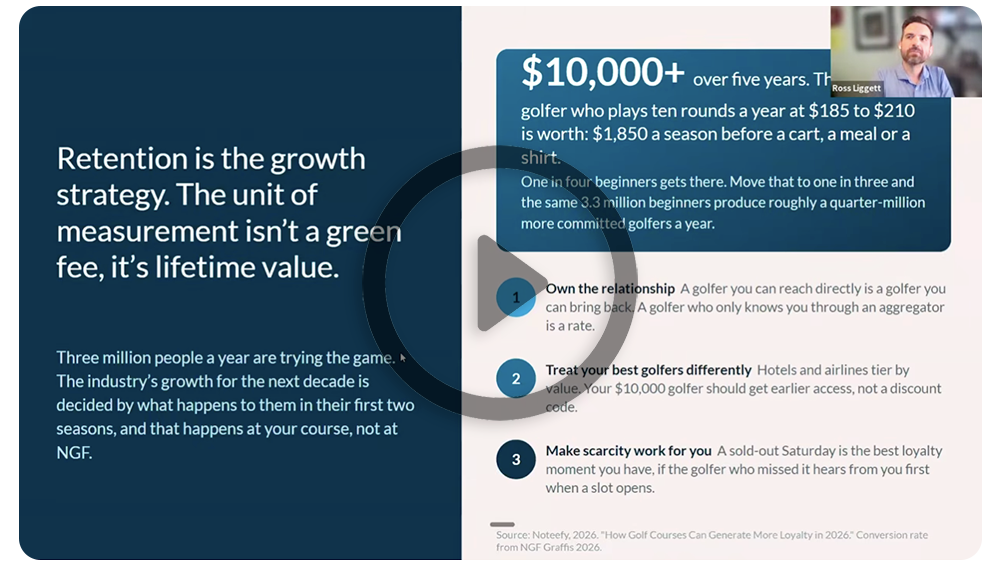
Watch the full conversation.
Noteefy, Lightspeed, and Ron Jaworski Golf on what comes after golf's historic run, from retention to protecting perishable tee-sheet inventory.