In This Article
What Does Golfer Loyalty Actually Look Like in 2026?
Golfer loyalty in 2026 means a player who books directly with you instead of through an aggregator, chooses your course over a competitor at the same price, joins your waitlist when you're full instead of leaving, and whose spend compounds round over round because you've earned their preference. It isn't built with a punch card. It's built by knowing your golfer, treating your best customers differently, and owning the direct relationship before someone else does.
Punch cards and annual passes aren't a loyalty strategy, they're a discount program. In 2026, golfer loyalty is built across every touchpoint a player has with your course, from the moment they consider booking to the moment they walk off 18. The operators winning on retention have stopped thinking about green fees and started thinking about lifetime value.
The Real Loyalty Opportunity in Golf
For most public and semi-private operators, the customer relationship looks something like this: A golfer searches for a tee time, sometimes through a third-party aggregator, books at whichever course has the best price or the best time slot, plays the round, and leaves. The course captures a green fee. Maybe a beverage cart spend. And almost no useful information about who that golfer is, why they chose you, or whether they'll ever come back.
The missed opportunity is helping that golfer build a direct relationship with the course.
The post-COVID boom masked this for a few years. Demand was so high that filling the tee sheet didn't require a ton of real customer intelligence or data. Now demand is normalizing. Operators are starting to feel what every other consumer business has felt for a decade. The cost of acquiring a new customer is higher than the cost of keeping an existing one, and you can't keep someone you don't know.

What Loyalty Actually Looks Like in 2026
Loyalty in golf used to mean a member who renewed every year. That definition still holds for true private clubs. For everyone else, loyalty in 2026 looks different. It's a golfer who books directly with you instead of through an aggregator. It's a golfer who chooses your course over a competitor offering the same price. It's a golfer who joins your waitlist when you're full instead of clicking over to the next available course. It's a golfer whose lifetime value compounds round over round because you've earned their preference.
That kind of loyalty is built on a handful of shifts that most operators haven't fully embraced yet. Each one already exists, fully matured, in another hospitality category.
Today’s Leaders in Earning Golfer Loyalty Are Getting Creative with Memberships and Incentives
JC Players Card, JC Golf
The JC Players Card includes Southern California’s finest golf courses and offers exclusive JC Players Card Rate on Rounds All Year. (JC Players Card | JC Golf)

The JC Players Card is available in different tiers, including Classic Weekday, Classic Anytime, Signature Weekday, and Signature Anytime, each with its own set of benefits including guest passes, equipment and merchandise discounts, and preferred partner deals.
The Players Club, American Golf Corporation
The Players Club is designed for golfers who love to play and want more value every time they tee it up. When golfers join, they unlock exclusive member-only benefits, preferred pricing, and special offers. Players Club - American Golf
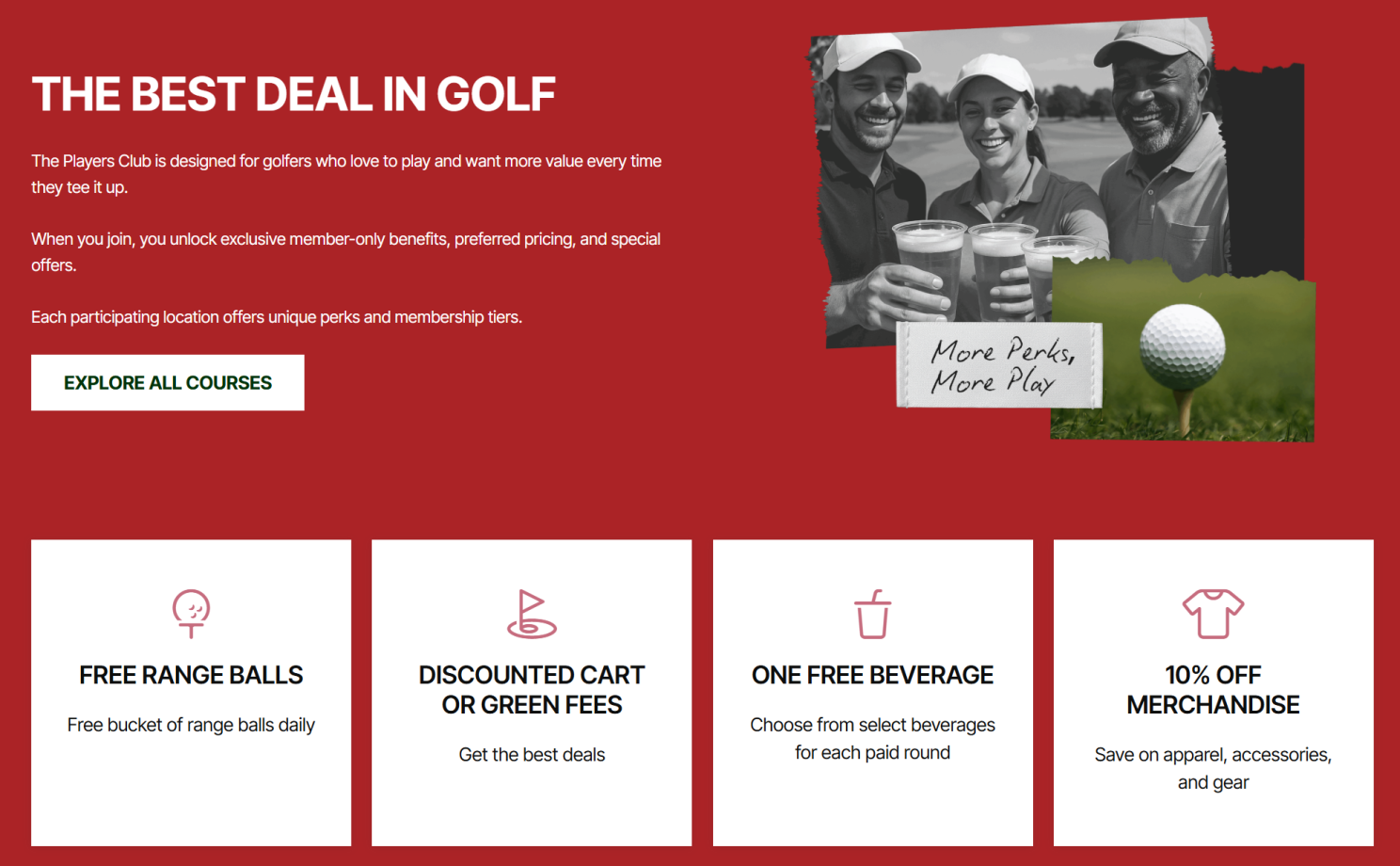
Each participating location offers unique perks and membership tiers that includes range balls, discount cart and green fees, merchandise discount, and more.
Five Shifts That Actually Move the Needle
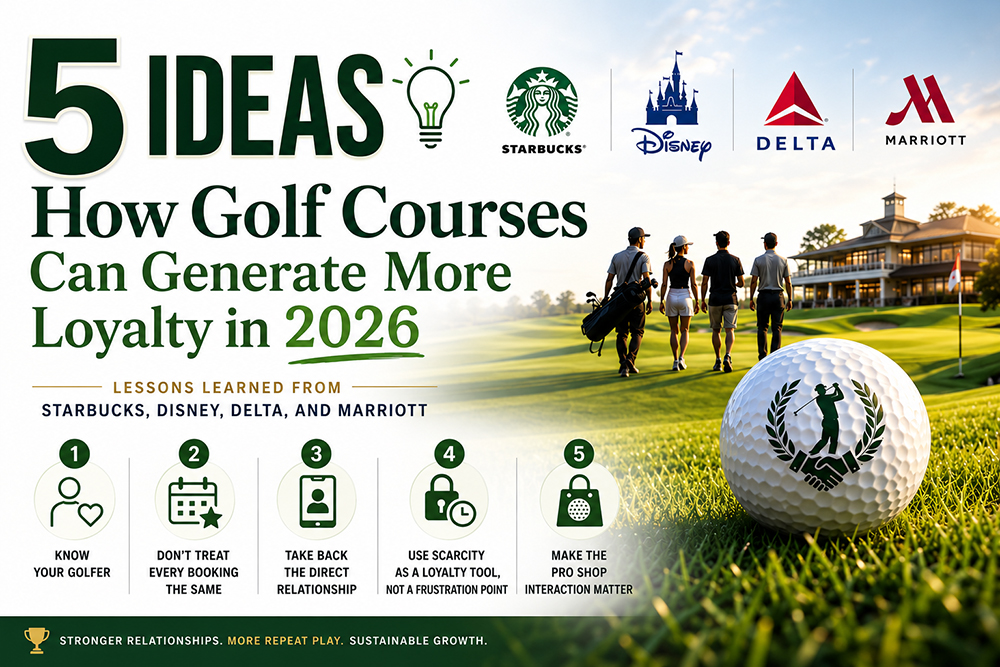
1. Know your golfer
Most operators have golfer data scattered across a tee sheet, a POS, a CRM, a waitlist tool, an F&B system, and a range management platform. None of those systems talk to each other.
Compare that to a Marriott Bonvoy member checking into a Westin. The front desk already knows their preferred floor, whether they want a king or two queens, the last time they stayed, the welcome amenity they were sent on their birthday, and whether the last visit had a service issue.

The more nights you stay, the more the benefits increase.
Golf operators have most of the same data points scattered across systems. They just haven't connected the dots. The course that knows a guest played 14 rounds last year, spent $1,200 in the pro shop, and always brings three friends on Thursday mornings. The course that can connect the dots is the one that can actually act on it.
2. Don’t treat every booking the same
A guest who plays once a year and a guest who plays twice a month should not receive the same confirmation email, the same offer, or the same experience walking up to the counter.
Look at how Delta runs the cabin. The same airplane carries a Diamond Medallion who gets pre-boarded, upgraded, and greeted by name by the flight attendant, and a basic economy passenger who boards last and gets nothing extra. The experience is intentionally different because the relationship is different. Loyalty programs work because they deliver visibly better treatment to better customers.
The same pattern shows up in categories you wouldn't expect. Starbucks built a $35 billion company on a loyalty program that knows what you order before you do. The app surfaces your usual, suggests pairings based on past behavior, sends you a free drink on your birthday, and pushes targeted offers to lapsed users with stunning precision. Sweetgreen does the same with bowls. Both companies took a commodity, coffee and salad, and turned the experience around it into something customers actively prefer to choose.
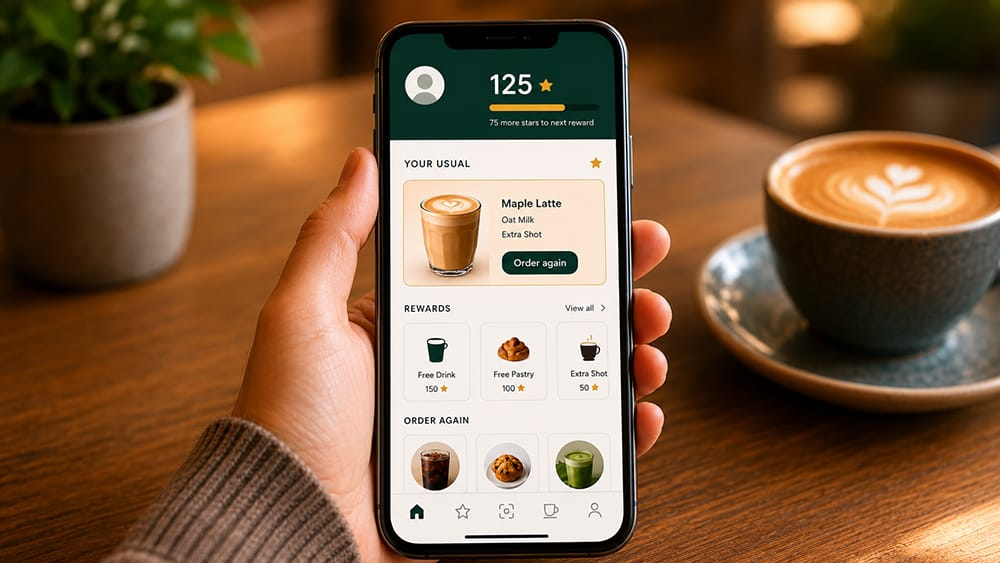
The differentiation is in the relationship layer wrapped around it. Tiered communication, personalized offers tied to actual play patterns, and recognition at check-in are standard in every other hospitality category. They should be standard in golf, too.
3. Take back the direct relationship
Every booking that flows through a third-party aggregator is a booking where the aggregator owns the relationship. That isn't always bad; there are golfers you'd never reach without those channels. But the operators who win in 2026 are the ones who make direct booking so easy, so fast, and so rewarding that golfers actually prefer it.
The hotel and airline industries have been waging this war for a decade. Hilton and Marriott don't just match Expedia pricing on their own sites, they undercut it, and they layer on member-only perks like late checkout, free Wi-Fi, and bonus points. Delta and United do the same with "book direct" fares and elite-status earning. Even Starbucks turned its app into the primary ordering channel by making mobile order faster, easier, and more rewarding than walking up to the counter. The message to the consumer in every case is the same. If you want the best price and the best treatment, come directly to us, not the middleman.
Golf has the same opportunity hotels and airlines seized a decade ago, and the same playbook works: a frictionless booking flow, embedded payments that don't fail, and a clear reason to come back to your channel instead of an aggregator's channel are how you take the relationship back.
4. Use scarcity as a loyalty tool, not a frustration point
When you're full, what happens to the golfer who wanted to play? In most operations, they go book somewhere else.
Compare that to the way Resy and Tock have changed restaurant reservations. The hottest tables in New York are usually booked weeks out, but the good restaurants don't just say "sorry, we're full." They invite you to a notify list, capture your preferred dates, and ping you the moment something opens. Carbone has a waitlist. The French Laundry has a waitlist. The restaurant has turned a denied booking into a captured demand signal.
Disneyland figured out a related lesson. When demand outstrips capacity, you don't just say no, you create tiers of access. Lightning Lane lets certain guests skip the line at the rides they actually care about. It's both a revenue lever and an experience lever, because the people who value it most are the ones who get it. The frustration of waiting in a four-hour line becomes a 20-minute walk-on, and the willingness to pay or earn that access becomes a loyalty signal in itself.
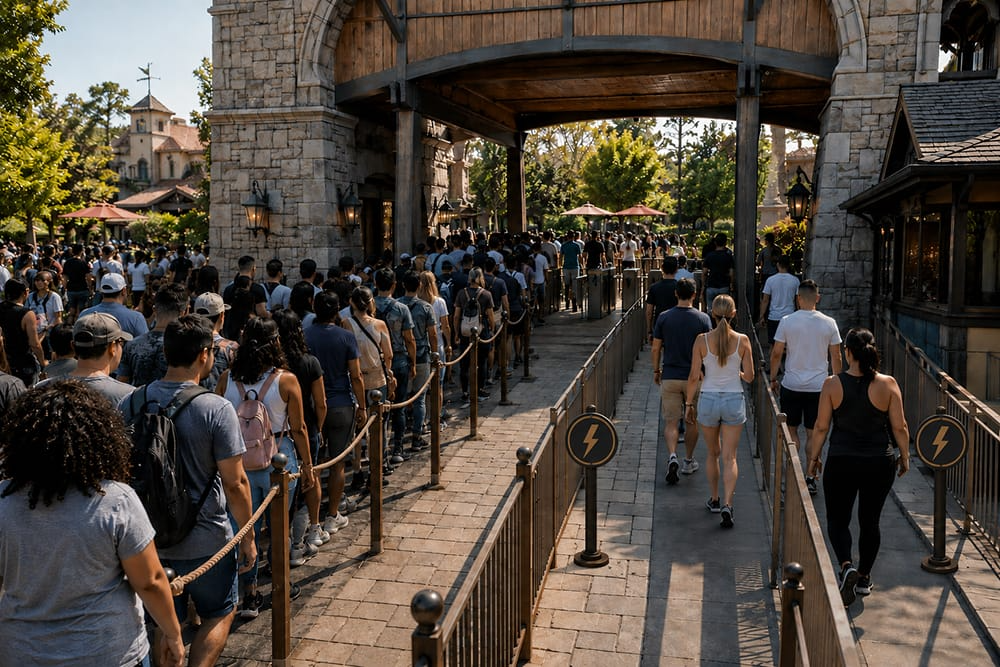
Operators like JC Golf are starting to apply this thinking to tee times. Through Noteefy's waitlist platform, their most engaged golfers can get preferred access to high-demand slots that would otherwise be claimed in a first-come-first-served scramble. The result is something most courses haven't considered: turning peak demand into a loyalty moment instead of a stress point for the golfer who didn't get on. The Saturday morning waitlist stops being a rejection and starts being a relationship.
5. Make the pro shop interaction matter
Most loyalty in golf still gets built or broken at the counter. The five minutes between checking in and walking to the first tee is when a golfer decides whether your course feels like their course.
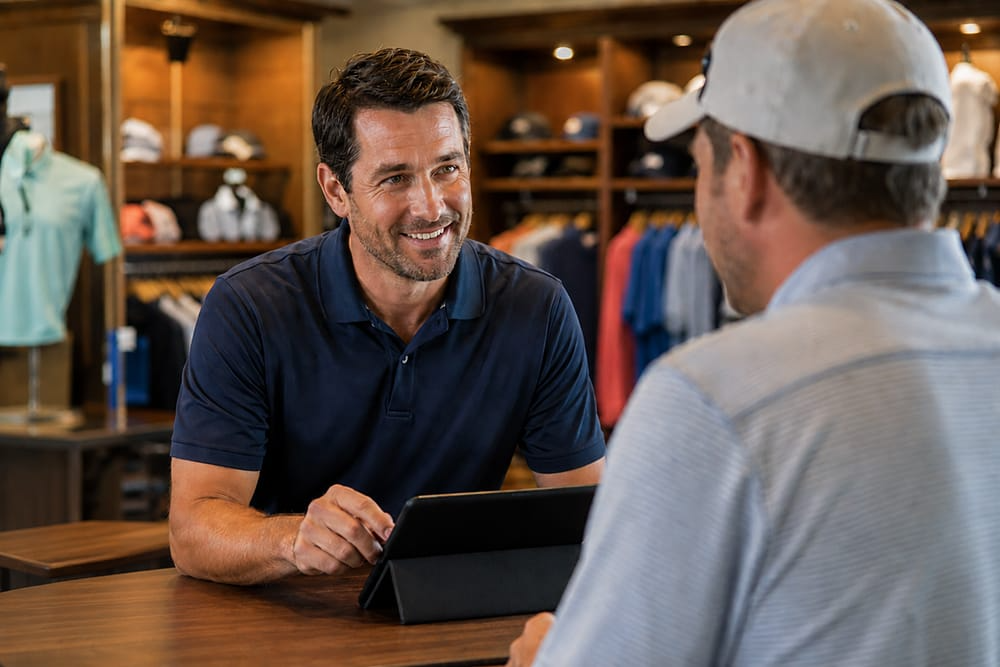
The Ritz-Carlton built its entire reputation on this idea. Their training program teaches staff to recognize returning guests, anticipate needs, and personalize the interaction without being asked. The maître d' at a top restaurant greets a regular by name, asks about their family, and walks them to their usual table. None of that requires AI. It requires two things: data surfaced to the person at the point of interaction, and a culture that values the human touch.
The technology layer matters too. A staff member who can see a golfer's history, recognize them, and reference a previous visit is doing the work of loyalty in real time. Most operators have the data to enable this, but very few actually surface it to the people at the counter.
The 2026 Operator Mindset
The operators worth watching in 2026 share a common belief. They've stopped thinking about golfers as transactions and started thinking about them as relationships that compound over time. The unit of measurement isn't a green fee, it's lifetime value.
That mindset changes everything downstream. It changes how you spend on marketing, because acquiring a golfer who will spend $4,000 with you over five years justifies a very different acquisition cost than a one-time guest. It changes how you staff, because the pro shop becomes a loyalty engine, not just a transaction point. It changes which technology you invest in, because data unification and personalization are the foundation of everything else.
The good news is that golf doesn't have to invent any of this from scratch. The hotels, airlines, coffee shops, salad chains, restaurants, and theme parks that figured loyalty out spent the last twenty years writing the playbook. The tools are mature, the data is finally accessible, and golfers are ready for it.
In 2026, the courses that win on loyalty won't be the ones with the cheapest twilight rates. They'll be the ones that show up, week after week, like they actually want a relationship.